

Colleen Slemmer was 19 years old when she was tortured, beaten, cut and taunted for nearly an hour before being murdered with a chunk of asphalt.
I started this blog with Colleen’s name because she’s been a sidebar for weeks now in stories about her gruesome 1995 murder. The “main” story has been that of Christa Pike, the ring leader in this atrocious crime carried out by three people Colleen thought were her friends.
Pike, who received a stay of execution Wednesday morning before the Supreme Court overturned it, has been THE news for weeks now, as she and her attorneys have pushed for clemency, largely tied to her fear of lethal injection.
“I’m at peace and not afraid to die,” Pike said. “I’m only nervous about the process.”
I’m sure Colleen Slemmer was nervous on Jan. 12, 1995, when Pike, then 18, Tadaryl Shipp, 17, and Shadolla Peterson, 18, lured her out for a night of smoking weed away from the Knoxville Job Corps, only to be taken to a wooded area on the University of Tennessee’s Agricultural campus.
There, Pike accused Slemmer of trying to steal Shipp, her boyfriend, before forcing Colleen to take off her clothes. At that point, Pike and Shipp carved a pentagram into Slemmer’s chest while she was still alive.
The trio battered Colleen for another 30 minutes, using a meat cleaver and box cutter, before Pike delivered the fatal blow, smashing asphalt into her head hard enough to crush her skull. Pike took a piece of the skull and gleefully showed it off during the following days at the Job Corps.
All of this to say forgive me for having zero empathy for Pike and her concerns about the lethal injection possibly hurting.
If you’ve read “Goodbye, Butterfly: Murder, faith and forgiveness in a small Kansas town,” you know that the death penalty is one of the key topics covered in the book. In particular, forgiveness is one of the main themes. I sat in awe listening to Brenda Keller’s parents talk about their grace for their daughter’s murder.
At the time of Brenda’s murder in 1991, Kansas did not have the death penalty. Because of this, Jon Mareska Jr.’s life was not on the line. Hell, the state didn’t even have a life without parole sentence then, as it does now. As a result, Mareska is eligible for parole in 2031.
“He’s never getting out,” said Bill Lucero, an anti-death penalty advocate and longtime friend of Bob Keller, Brenda’s dad.
As I worked on “GB,” I was moved by Bob’s work advocating against the death penalty, a stance he took in the years after Mareska received the equivalent of a 40-years-to-life sentence. He repeatedly spoke to the Kansas Legislature on the matter into the late 1990s. Though I’ve always believed the death penalty has a place, I readily admit that Bill and Bob made me question it.
Ironically, I believe Mareska would be on death row right now had that penalty been available in 1991-92 (Kansas re-instituted the death penalty in 1994).
Also ironically, Bob’s views on capital punishment have changed. In one of our conversations not long before the book published in September 2024, he stated that the death penalty should be applied when appropriate.
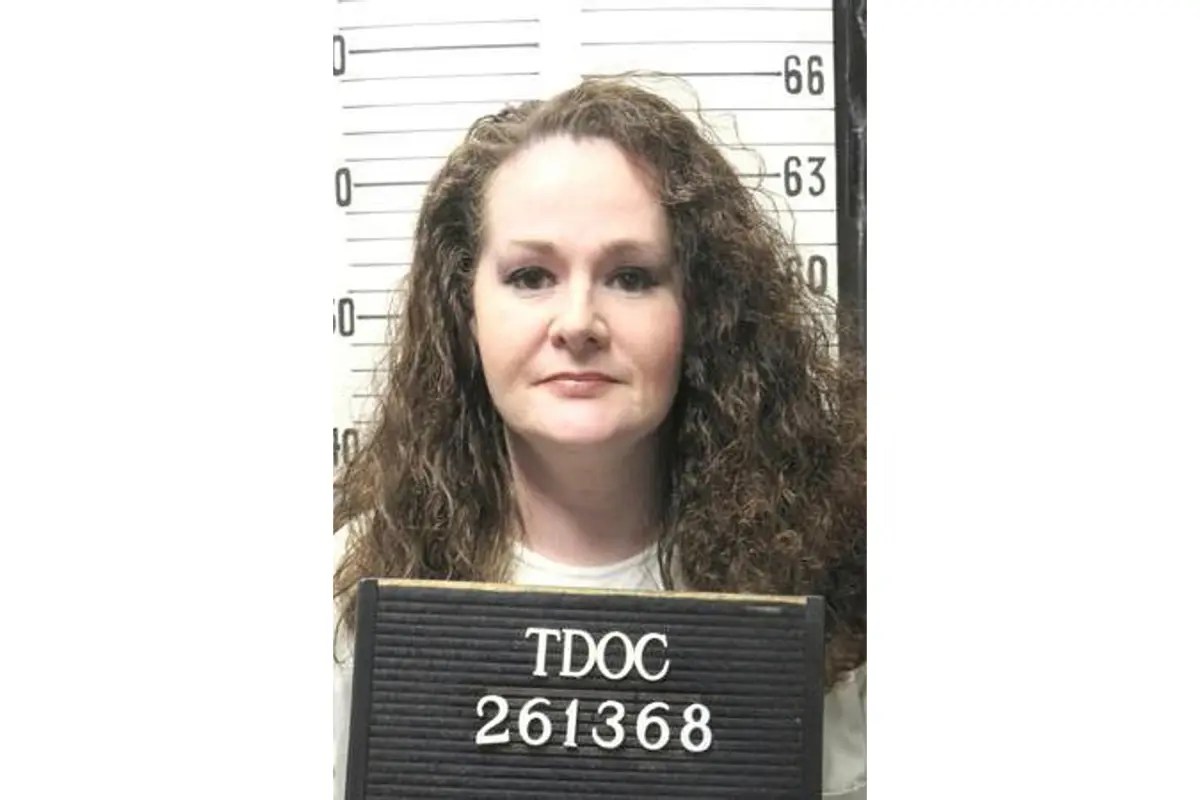
I still believe it should be, though I understand why many people believe it should be banned. With the sentences come numerous appeals, prolonging the ordeal and reopening wounds that will never completely heal. In many states, that has become a significant problem, including Kansas, which has not executed any of the nine people on death row, some who have been behind bars for 30 years now. And, sadly, people who were innocent have been executed.
Some offenses, however, are so hideous that the death penalty should be applied when guilt is unequivocally proven. Torturing a girl, crushing her head, showing no remorse and bragging about it certainly qualifies. Pike had a rough childhood, but she also had a choice and knows right from wrong. If she was truly remorseful or showed any signs of rehabilitation (she attempted to murder a fellow inmate in 2001, among other offenses while incarcerated), her life might have been spared.
The most important person involved in this case, other than Colleen, believes lethal injection is justice.
“Maybe now finally we have justice,” said May Martinez, Colleen’s mother. “It may not bring by daughter back, but it might save another person from getting killed because she will do it again.”